
What is Duolingo Dialogues?
A conceptual project, Dialogues is an addition to Duolingo that would utilize their large, pre-existing customer base in order to create a multi-player experience satisfying user demand for conversation practice, while still keeping the gamification that makes the app unique.
What did we do?
Using common video game conventions like matchmaking, parties, friends list, invites, etc.,
Key Points:
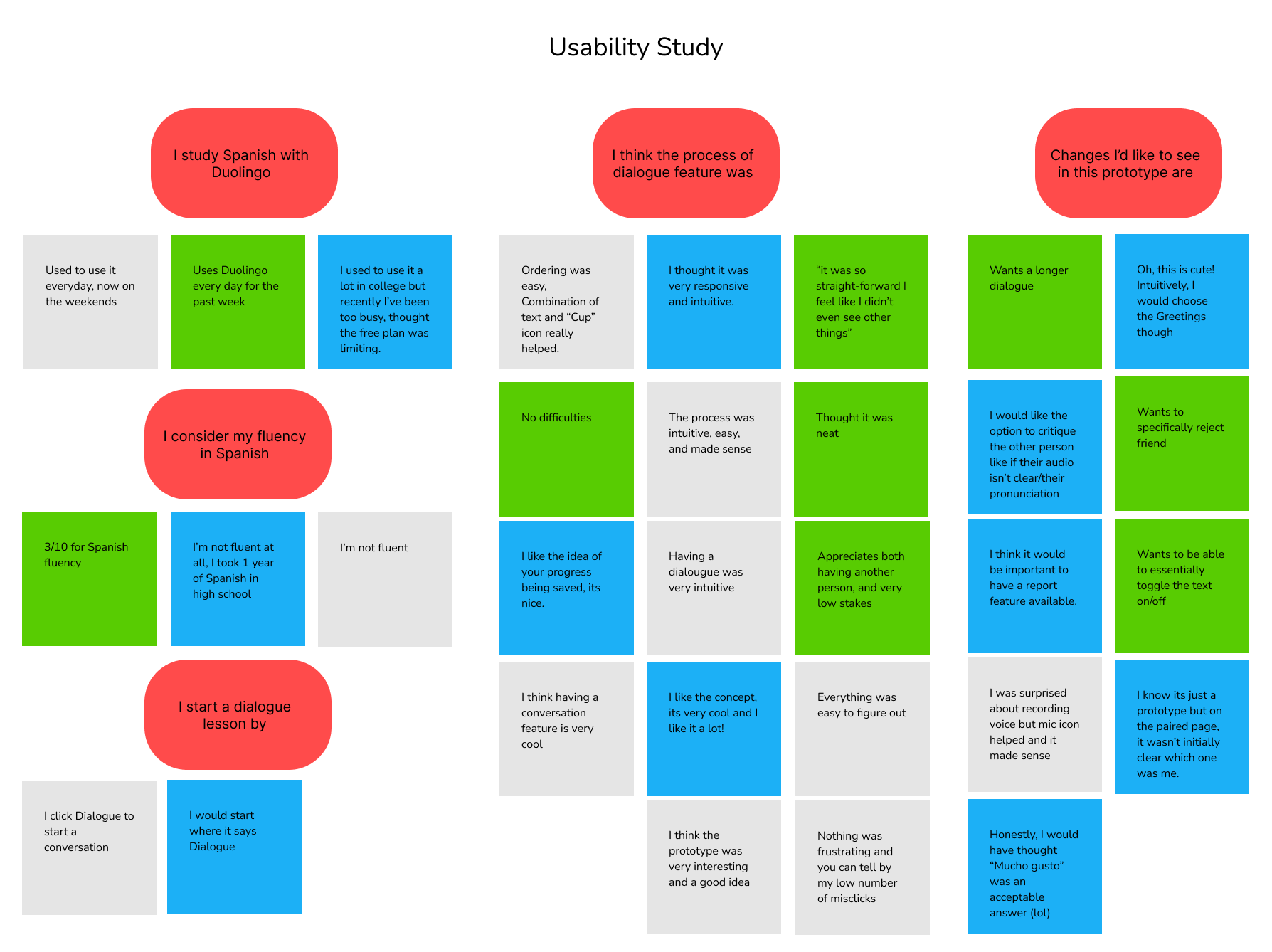
- User research suggested a strong need for conversation project and practice listening to regular speakers. From that, we extrapolated a need for player to player interactions.
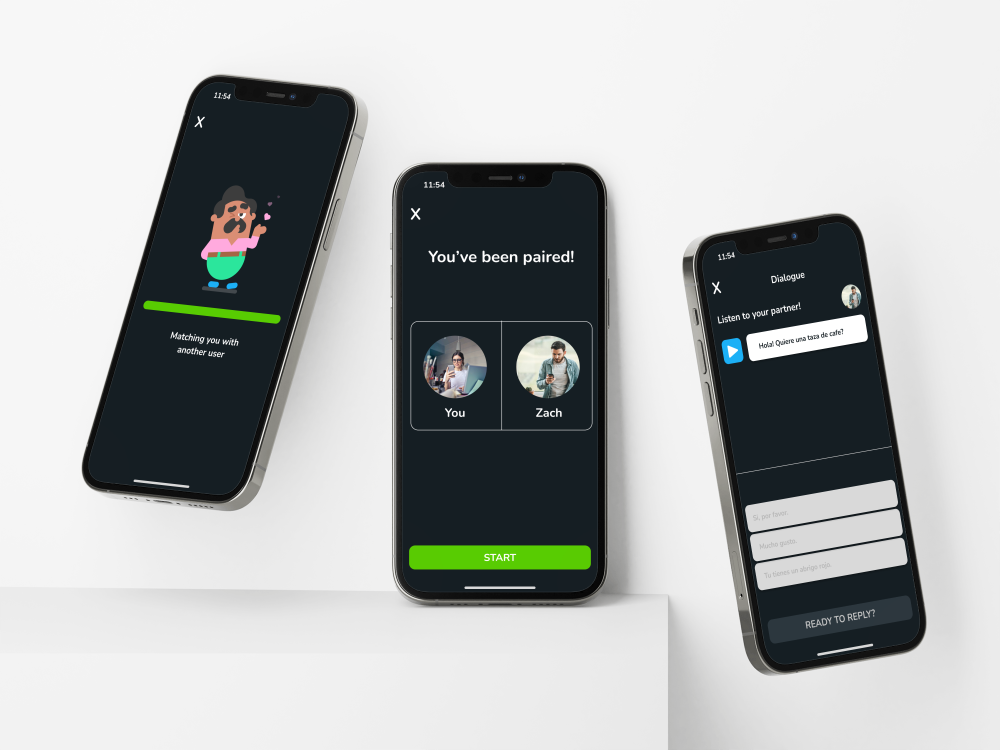
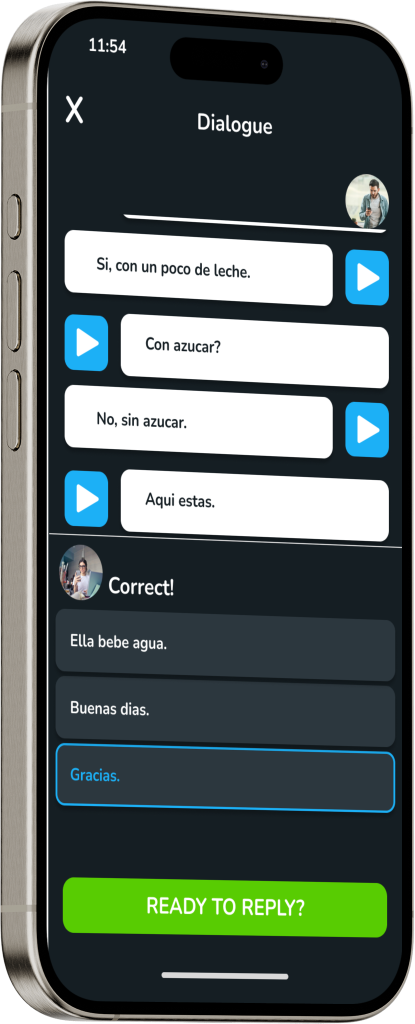
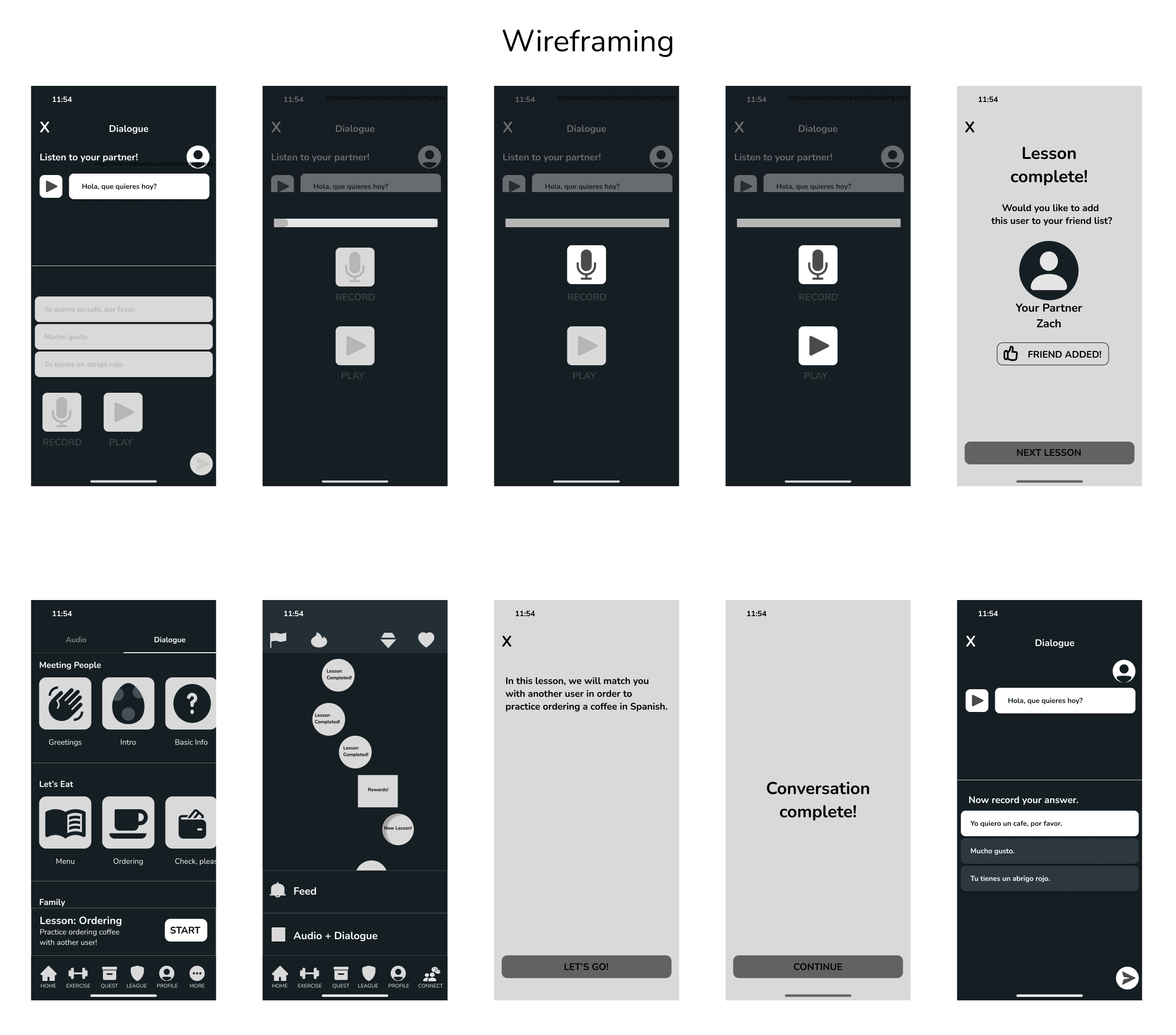
- Keeping the experience authentic to Duolingo was important. We wanted the look and feel of the loading and waiting screens to match, and we wanted to keep the game aspect. To that end, players still select the appropriate response to a prompt, and then are able to record the response for their partner to listen to. This gives their partner something to listen to as practice, and can then figure out how to continue the conversation.
- An interesting conundrum: something we didn't sort out, was what happens while the other person is playing/recording. If Player 2 is answering, does Player 1 just wait? We have Duo doing a nice hopping dance at present, but something more engaging could be put in that place.
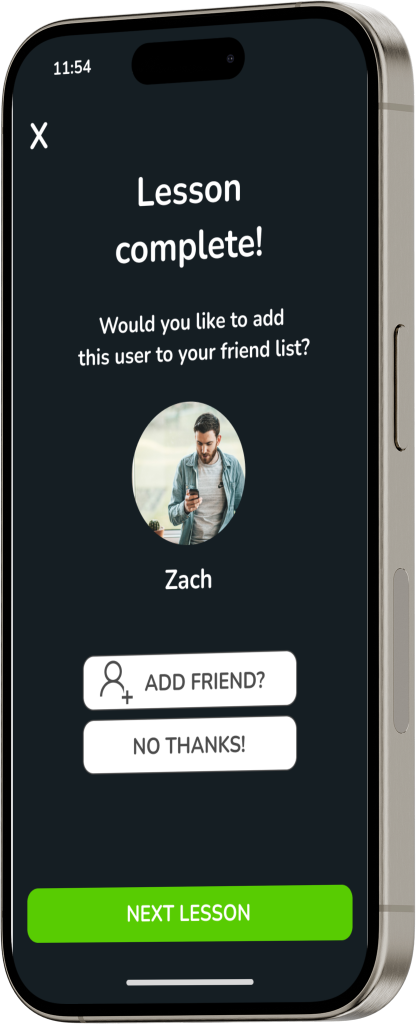
- The "add friend" option at the end is for players using a matchmaking function to find someone doing the same lesson. We wanted the friend option to also show up at the end, with the intent that these scenarios could be run through with friends on a whim, regardless of where you are in your respective lessons.
- We updated the Duolingo map to include Dialogue lessons as part of the curriculum, and show off a menu screen to highlight different conversation options.
My Contributions:
- As an avid gamer, the multiplayer idea and related concepts were natural spaces to explore, and I ended up creating the overall concept for this project. I focused particularly on ensuring our ideas lined up with how modern matchmaking systems and multiplayer games tend to work.
- The infrastructure came from my understanding of "friend" systems in online games, how an LFG tool or matchmaking system should work, and how a turn-based game functions online.